
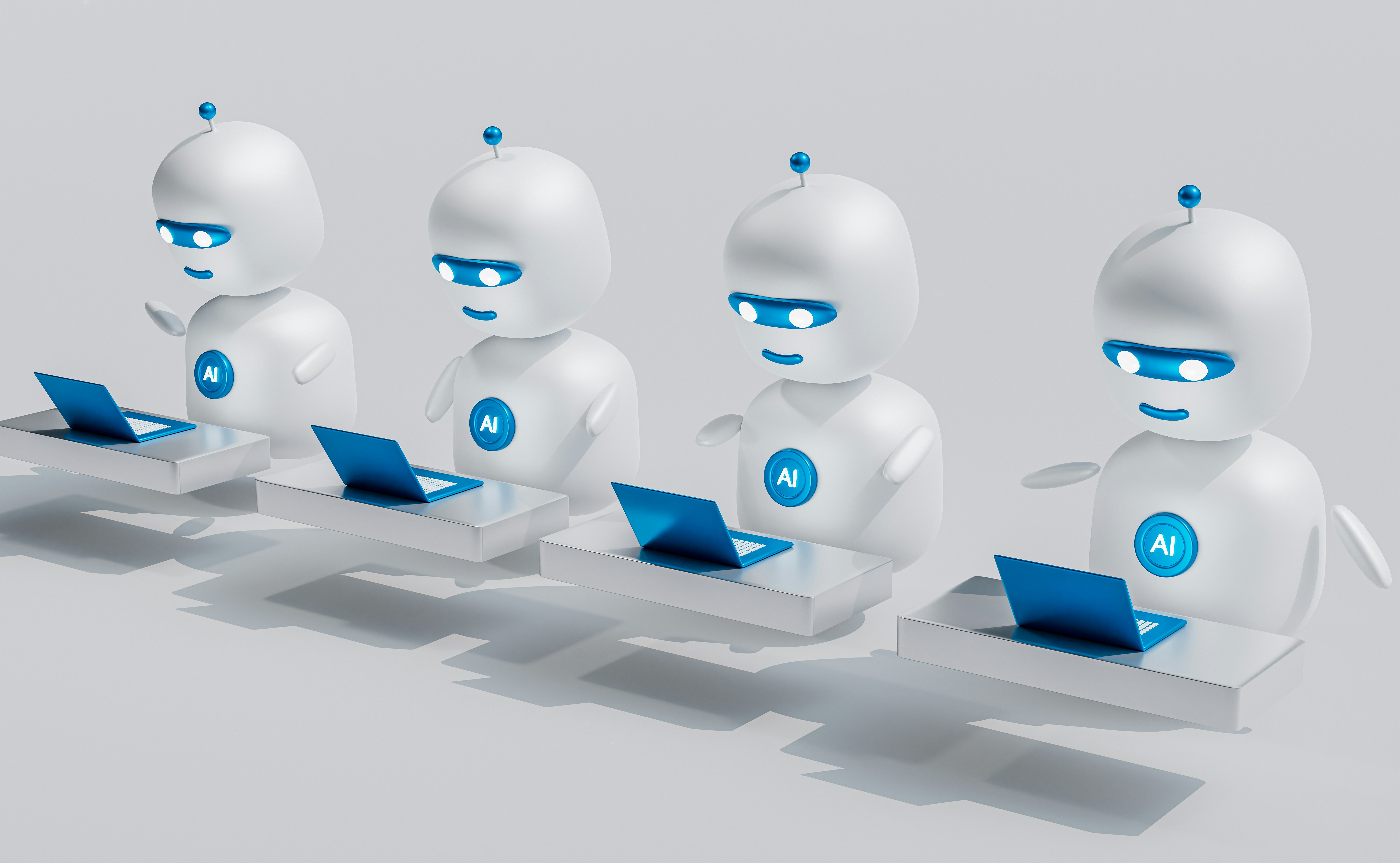
Introduction: The Rise of AI in the Workforce
The integration of artificial intelligence (AI) into various industries has become increasingly prominent over the past few years. This technological advancement is reshaping the workforce landscape, prompting discussions regarding the implications for employment and job security. AI technologies are being adopted in sectors ranging from manufacturing and healthcare to customer service and finance, illustrating the diverse roles that these intelligent systems can assume.
As automation and AI capabilities continue to evolve, questions arise about their potential to displace traditional jobs. Reports of workers being replaced by machines have stirred anxiety among employees and job seekers. Moreover, the rapid advancement in AI technology raises fears of a future where human labor may become redundant. However, it is essential to analyze whether these fears are entirely justified or if there is a more nuanced perspective to consider.
While there is no denying that AI is capable of performing specific tasks more efficiently than humans, the narrative surrounding job replacement does not take into account the potential new opportunities AI presents. The same technology that might reduce the need for certain jobs can also create entirely new fields, requiring new skills and expertise. For instance, roles in AI development, maintenance, and ethical oversight are emerging, highlighting the dynamic nature of the job market.
Thus, the conversation surrounding AI in the workforce must extend beyond mere job displacement fears. Instead, it is crucial to evaluate how AI can complement human labor, foster economic growth, and enhance productivity. By adopting a balanced approach, stakeholders can better understand the complexities of AI integration in the workplace and its implications for the future of employment.
Understanding AI’s Role in the Workplace
Artificial Intelligence (AI) refers to the simulation of human intelligence in machines that are designed to think and act like humans. In a workplace context, AI encompasses a broad range of technologies and tools, including machine learning, natural language processing, and robotic process automation, among others. These technologies enable machines to perform tasks that would typically require human cognitive capabilities.
The applications of AI in the workplace are vast and varied. One of the primary functions of AI is task automation, which allows organizations to streamline operations and reduce human labor in repetitive or mundane tasks. For instance, AI systems can automate data entry, customer support queries through chatbots, and even complex tasks like analysis and forecasting in finance. By relieving human workers from these tasks, companies can reallocate resources to more strategic and creative endeavors.
Importantly, while AI technologies change the nature of work, they also create opportunities for new roles that require human-AI collaboration, data analysis, and ethical oversight. Understanding AI’s role involves recognizing its potential to enhance productivity while also preparing for the implications that its integration brings to the workforce.
The Fear of Job Loss: Statistics and Perceptions
The advent of artificial intelligence (AI) and automation has sparked considerable debate regarding its impact on employment. Numerous statistics have emerged, indicating a tangible concern among the workforce about job displacement. According to a report by McKinsey Global Institute, it is estimated that by 2030, as much as 30% of the global workforce could be displaced by automation. This significant percentage has contributed to widespread anxiety over job security in many industries.
A survey conducted by Pew Research Center found that approximately 72% of American adults expressed concern that automated technologies will result in job losses in their own industries. This perception is not limited to a specific demographic; it spans various age groups, income levels, and educational backgrounds, indicating a broad consensus on the matter. Furthermore, a study by the World Economic Forum underscores these findings, predicting that 85 million jobs may be displaced by 2025 due to the shift in labor between humans and machines.
The fear of job loss is compounded by media narratives that often emphasize negative outcomes of AI and automation, portraying a dystopian future where machines dominate the labor market. Such portrayals heighten public anxiety, influencing perceptions of job security and future employment prospects. Many workers may feel ill-equipped to compete in an increasingly automated world, leading to a further decline in overall morale within the workforce.
However, while the fear of job loss is grounded in significant data, it is essential to recognize that change in the labor market often brings both challenges and opportunities. Addressing these fears through education and reskilling programs could mitigate the negative impacts of automation, enabling workers to adapt to new roles created by technological advancements.
Positive Impacts of AI on Employment
The advent of Artificial Intelligence (AI) has begun transforming various sectors, contributing to not only efficiency and productivity but also positively impacting employment opportunities. Contrary to the common perception that AI solely leads to job displacement, numerous studies and real-world examples suggest that AI can serve as a catalyst for job creation and enhancement.
One significant way in which AI can contribute to employment is through the creation of new roles in emerging industries. For instance, the development of autonomous vehicles has necessitated the need for specialists who can design, maintain, and operate these advanced systems. According to a report from the World Economic Forum, it is estimated that AI will generate approximately 97 million new jobs by 2025, spanning roles in fields such as data analysis, machine learning, and AI system management.
Furthermore, AI has the capacity to enhance existing job roles by automating routine tasks, allowing workers to focus on more complex and creative responsibilities. An example of this can be seen in the healthcare industry, where AI tools enable medical professionals to analyze data more efficiently, leading to better patient outcomes. Surgeons, for instance, can harness robotic-assisted technologies for precision, thus improving their performance and minimizing risks. In this manner, AI acts as an ally, augmenting human capabilities rather than replacing them.
Moreover, AI has shown potential in boosting productivity across numerous sectors, which can result in job retention and even lead to hiring for expansion. Companies that integrate AI technologies often experience reduced operating costs and improved service delivery, leading to increased market competitiveness. This effectiveness can promote business growth, ultimately resulting in more employment opportunities as organizations expand their workforce to meet the demands of a growing customer base.
Transitional Jobs: The New Roles AI Creates
The advent of artificial intelligence (AI) has given rise to a variety of transitional jobs designed to support, maintain, and enhance these technological advancements. As organizations increasingly integrate AI into their operations, they require skilled professionals to oversee the effective implementation and management of these systems. One prominent field witnessing growth is AI maintenance, where technicians ensure that AI systems function optimally, quickly diagnosing and resolving issues to minimize downtime.
Another emerging role is that of data analysts specializing in AI-generated data. As AI technology processes vast quantities of data, the need for individuals who can interpret, summarize, and make actionable insights from this information becomes crucial. Data analysts are tasked with understanding patterns and trends, guiding business decisions and strategy formulation based on the insights derived from AI systems.
Moreover, the rise of AI has fueled demand for professionals in the field of machine learning engineering. These experts are responsible for designing algorithms that enable machines to learn from data. Their work goes beyond mere programming; it involves understanding the intricacies of data input, outcome expectations, and refining models for better accuracy. This role combines technical skills with a deep understanding of the theoretical foundations of AI.
As AI continues to evolve, new roles in ethical AI governance are also emerging. This area focuses on ensuring that AI systems operate fairly and responsibly, addressing concerns like bias in algorithms and user privacy. Professionals in this field will need a blend of technical knowledge and ethical understanding to navigate these complex issues.
In summary, while AI may disrupt certain traditional roles, it simultaneously creates numerous transitional jobs that require new skills and expertise. By embracing these opportunities, workers can align their careers with the demands of a rapidly changing technological landscape.
Reskilling and Upskilling: Adaptation to AI
The emergence of artificial intelligence (AI) within the workforce has ignited discussions about its potential impacts on employment. While the fear of job displacement is prevalent, it is crucial to consider the opportunities that AI presents for enhancing workforce capabilities through reskilling and upskilling. This process refers to educating and training individuals to ensure they possess the necessary skills to thrive in an evolving labor market shaped by technological advancements.
The concept of reskilling involves equipping workers with entirely new skill sets required for different job roles, often as a response to job displacement caused by AI. Conversely, upskilling focuses on enhancing existing skills to improve job performance and adaptability. Both processes are imperative for workers who aim to remain relevant and competitive in a landscape increasingly defined by automation and AI technologies.
Educators, employers, and policymakers play critical roles in facilitating these transitions. Educational institutions can collaborate with industry leaders to tailor courses that reflect the skills needed in today’s and tomorrow’s job markets. For instance, the integration of soft skills training, such as critical thinking and problem-solving, alongside technical skills is vital for workforce adaptability.
Similarly, employers have a responsibility to invest in the continuous development of their workforce. Implementing comprehensive training programs not only aids in employee retention but also fosters a culture of lifelong learning. This proactive approach to workforce development can ultimately mitigate the risks related to job displacement and harness the potential of AI as a collaborative tool.
As organizations and employees embrace this transition, the focus must remain on creating an agile workforce capable of adapting to technological changes. By prioritizing reskilling and upskilling initiatives, stakeholders can effectively prepare for a future where AI serves as an ally in enhancing productivity and innovation rather than solely a threat to employment.
Case Studies: Companies Thriving with AI
In the contemporary business landscape, numerous companies have successfully embraced artificial intelligence (AI) technologies, optimizing their operations while ensuring that employee roles are enhanced rather than entirely replaced. This section will examine several notable case studies that exemplify how AI integration can lead to improved efficiency and productivity without significant job losses.
One prominent example is Siemens, a multinational conglomerate specializing in electrification, automation, and digitalization. Siemens has implemented AI into various facets of its operations, particularly within its manufacturing processes. By utilizing AI-driven predictive maintenance, the company has significantly reduced machine downtime and operational costs. Rather than eliminating jobs, this technology has enabled employees to focus on higher-level tasks, thereby enhancing their roles and improving overall job satisfaction.
Another example can be found with AT&T, which has integrated AI to enhance customer service through intelligent chatbots and virtual assistants. These AI tools handle routine inquiries efficiently, allowing customer service representatives to devote their time to more complex issues that require human intervention. This approach has not only preserved jobs but also elevated the skillset of the workforce, making employees more adept in managing challenging customer interactions.
Similarly, the financial services sector has seen advantageous AI integration. For instance, JPMorgan Chase employs AI algorithms to analyze vast amounts of data, facilitating faster decision-making processes in risk assessment and fraud detection. While this technology streamlines operations, it simultaneously creates demand for skilled analysts who can interpret the AI’s findings and strategize accordingly, leading to new job opportunities.
These case studies illustrate that the adoption of AI can result in a harmonious balance between technological advancements and workforce sustainability. By focusing on collaboration between AI and human employees, companies can thrive in an increasingly digital marketplace, reinforcing the idea that AI can be a partner rather than a competitor in the workplace.
The Future of Work: A Harmonious Coexistence?
The emergence of artificial intelligence (AI) in the workplace has raised important questions regarding the future of employment. With advancements in AI technologies, there is ongoing debate about whether these innovations will replace human workers or create new opportunities for collaboration. Industry experts contend that this transformative period could lead to a harmonious coexistence between AI and human employees, ultimately enhancing productivity and job satisfaction.
One perspective suggests that AI can take over repetitive and mundane tasks, allowing human workers to focus on more complex and creative responsibilities. For instance, in sectors such as manufacturing, AI-driven automation can streamline processes, leading to increased efficiency and reduced operational costs. Workers may find themselves engaged in roles that require critical thinking, emotional intelligence, and nuanced decision-making—capabilities that machines are not yet able to replicate.
Moreover, many experts argue that the integration of AI can lead to the creation of entirely new job categories that did not exist prior to its implementation. As organizations adopt AI solutions, they will need professionals to oversee, maintain, and improve these technologies. This will likely increase demand for positions in data analysis, AI ethics, and software development, requiring a workforce skilled in both technological and interpersonal domains.
Furthermore, there is significant focus on the importance of upskilling and reskilling initiatives in preparing the current workforce for an AI-enhanced future. By investing in education and training, organizations can empower employees to thrive alongside AI, ensuring that they remain valuable contributors in this evolving environment.
In conclusion, while challenges surrounding AI implementation in the workplace cannot be overlooked, the consensus among industry leaders is that a cooperative relationship between AI and human workers is not only possible but can also be beneficial. Emphasizing collaboration over competition can pave the way for a more innovative and inclusive future of work.
Conclusion: Embracing Change in an AI-Driven World
In the evolving landscape of work, the emergence of artificial intelligence (AI) heralds both challenges and opportunities. As organizations increasingly integrate AI technologies, the dialogue around whether these innovations will supplant human workers or rather enhance their capabilities has become paramount. The evidence suggests that AI, rather than being a foe in the workplace, can serve as a valuable ally, streamlining processes and augmenting human efforts.
Throughout our exploration, we have reviewed how AI is reshaping industries, redefining job roles, and fostering new opportunities for skill development. The integration of AI tools can lead to increased efficiency, enabling workers to focus on tasks that demand creativity and critical thinking—skills that machines currently cannot replicate. Rather than viewing AI as a threat to job security, we must acknowledge its potential to create a more dynamic work environment where humans and machines collaborate.
As we move forward, it is vital for individuals and organizations to maintain a growth mindset and remain open to learning and adaptability. The ability to upskill and reskill will be a significant determinant of success in this new era. Embracing AI not only requires an understanding of its capabilities but also a willingness to redefine our roles in light of its introduction. The future workforce will likely be characterized by a symbiotic relationship between human insight and technological prowess.
In conclusion, rather than fearing the rise of AI, we should prepare to leverage its benefits, fostering an environment of innovation and continuous improvement. By embracing these changes, we can transition into a future where AI complements human creativity, driving productivity and enhancing our professional landscape. Let us welcome the opportunities that arise from this transformation and consider AI as a catalyst for growth rather than an adversary.